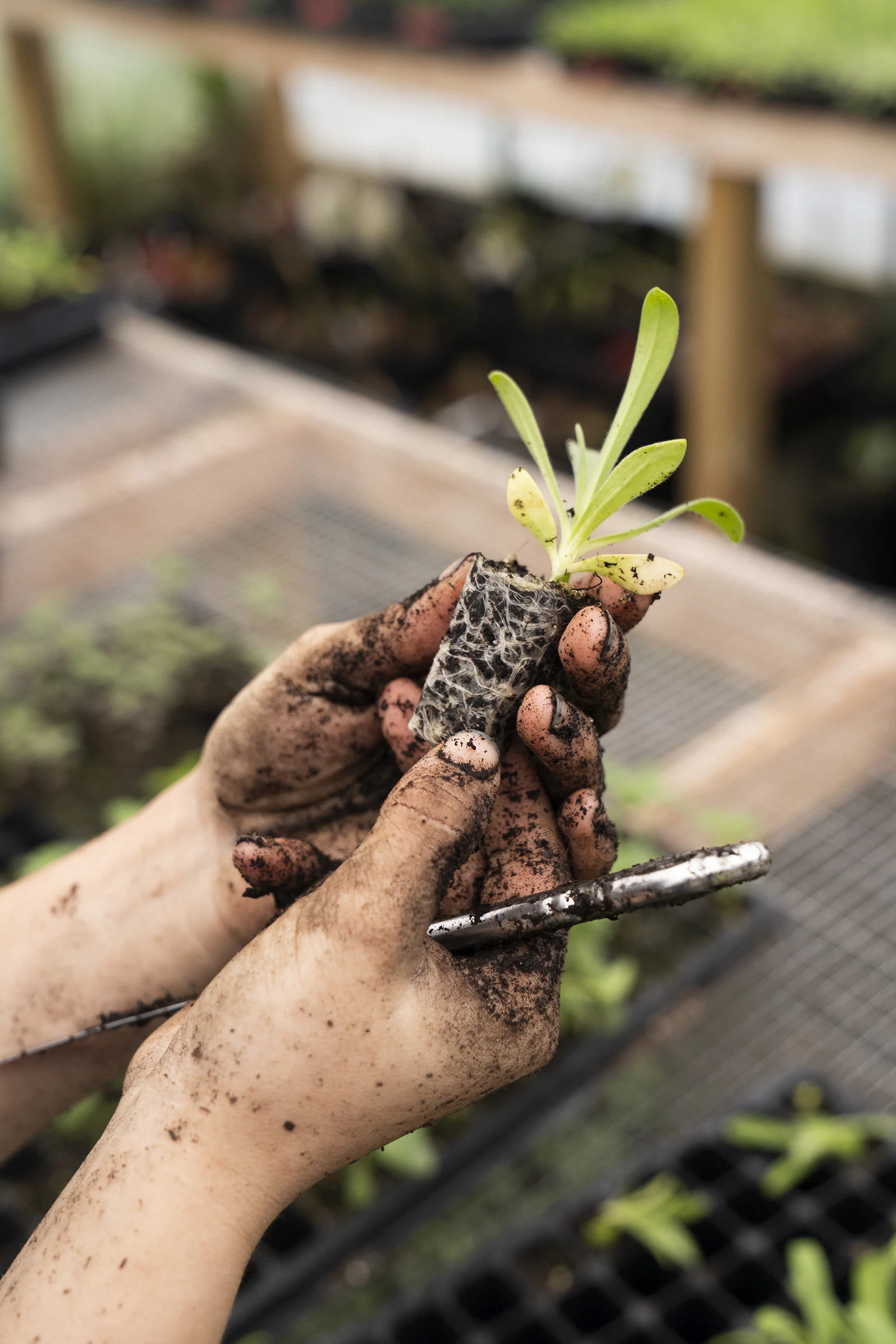

Design lower-impact products and recipes, before you commit.
See what a swap, a new origin or a lighter pack does to every impact category while it is still a decision. Chefs and menu teams start from the recipe alone; NPD teams work on the full product with packaging and production.
Change model · Wall's sausage roll v3
−18% climate change
vs current recipe · 4 changes · 16 categories
Change it on screen. Read the consequence in every category.
- 01
Start from a recipe or a full product
Recipe is a product type of its own: ingredients only, per-serving report, side-by-side comparison. A recipe becomes the formulation of a finished product when you are ready.
- 02
Model a change and watch the deltas
Swap an ingredient, move an origin, change a pack. Per-category deltas, the changes that drove them and the top contributors update live. Nest a model inside a model.
- 03
Ask the AI reduction agent
Set a target and your limits: allergens, cost increase, nutrition. The agent proposes substitutions and proportion changes, rebalances mass, and returns a fully scored change model with per-target verdicts. Anything it could not change is reported with the reason.
- 04
Compare and commit
Up to five products, recipes or models side by side across categories and lifecycle stages, with unit switching and export. Then commit the model as the new revision.

Decisions with the environmental consequence attached.
- Recipe footprints, per serving
All 16 categories and GHG for a recipe from its ingredients, with a unit lens and CSV export.
- Change models with live deltas
Category-by-category impact of a proposed change against the current product, with the drivers named.
- AI reformulation proposals
Substitutions and proportion changes within your constraints, scored by the platform's own engine, food products first.
- Side-by-side comparison
Products, recipes and models compared across categories and lifecycle stages; export as CSV or image.
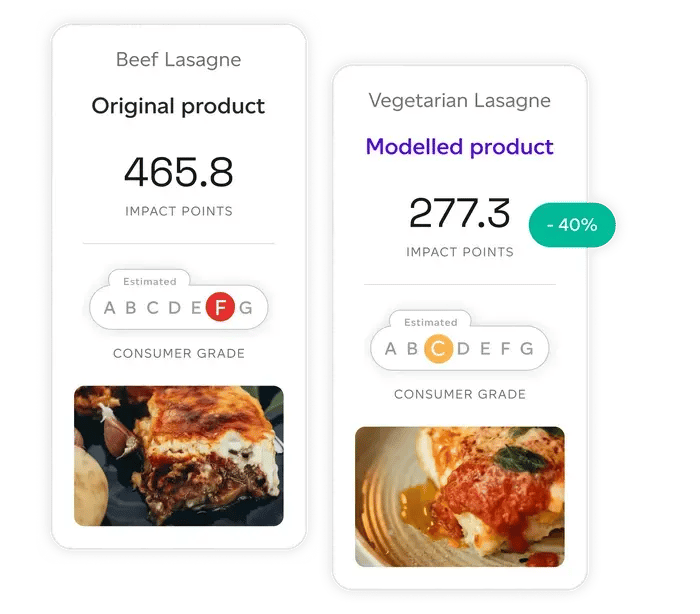
- Eco-label per variant
See the A+ to G grade move as the recipe moves.
- Better-supplier suggestions
While editing an ingredient, comparable Registry listings with lower impact, ranked within one comparability class.
“This works for one product, but we have ~4,000 SKUs across the group. We realised quite quickly that manual LCA wasn't going to scale: if the recipe changes, if the production facility changes, you have to go through the full LCA again.”
The package for this
Recipe & Menu Design, or Footprinting
Recipes and menus from ingredients on Recipe & Menu Design. Finished products with packaging and production on Footprinting. The AI reduction agent, targets and progress tracking come with Action & Mitigation, through our team.
From
£850
per year · Recipe & Menu Design, 1 user, 10 recipes · Footprinting from £1,060